

What if the issue with AI isn’t that it’s out to take our jobs but instead distort our reality? Despite the merits of AI, some organisations are reluctant to implement AI as the risk of data loss outweighs the potential benefits. What if the real risk of AI is due to improper design, implementation and maintenance? Many organisations implement new systems with pace in a “set it and forget it” manner, AI systems being no different, security as an afterthought taken seriously post-breach.
Without architecting clear trust boundaries and controls, AI becomes a significant threat vector for stealing sensitive data, personally identifiable information (PII) and intellectual property (IP), in addition to manipulating the knowledge base of AI systems. Before deploying such an influential tool, it is in public interest to architect a robust solution for architecting clear trust boundaries and data controls to mitigate risks related to data loss and uphold trust within Enterprise AI.
This article will discuss enterprise AI systems, outlining the risks, how to maintain AI systems deployed within enterprises, and why secure AI architecture and engineering decisions must be made ahead of going live.
Definitions & Concepts
- Large Language Model (LLM) - a machine learning model that can comprehend and generate human language, trained on large datasets ( Cloudflare).
- AI system - a machine-based system that is designed to operate with varying levels of autonomy and that may exhibit adaptiveness after deployment ( EU Artificial Intelligence Act).
- Retrieval Augmented Generation (RAG) - the process of optimising the output of a large language model, so it references an authoritative knowledge base outside of its training data sources before generating a response ( AWS).
- Fine Tuning - the further training of a pre-trained LLM on a task-specific dataset ( Google).
- Prompt Engineering - the practice of designing inputs for AI tools that will produce optimal outputs ( McKinsey).
- Architecture-First Approach - before implementation begins, software architectural design must be completed so the solution meets technical and operational requirements ( Kibru et al, 2020).
- Trust Boundary - a logical construct used to demarcate areas of the system with different levels of trust ( Microsoft).
What Enterprise AI Security Architecture Means
Enterprise AI security architecture is the structured design of controls around models, prompts, data flows, retrieval layers, user permissions, system integrations, and monitoring. In practice, secure enterprise AI means deciding what data the model can access, what systems it can influence, who can use it, how it is governed, and what happens when outputs are wrong, unsafe, or manipulated.
A strong enterprise AI security architecture should define trust boundaries, role-based access, logging, approval logic, retrieval controls, and rules for how model outputs are consumed by downstream systems. This is what turns AI from an experimental tool into a secure enterprise capability.
Karimah insight: An architecture-first approach treats AI like any critical enterprise system: identify crown-jewel data, map trust boundaries, and apply least-privilege and monitoring to the retrieval and output paths. This reduces reliance on post-hoc fixes and makes compliance and incident response measurable.
How Enterprise AI Systems Work
AI remains a growing technology trend with individuals and organisations integrating AI systems into their day to day life. Organisations typically compose AI systems from models, prompt layers, retrieval stores, and business workflows. Data quality and governance determine whether outputs are reliable and safe for enterprise use.
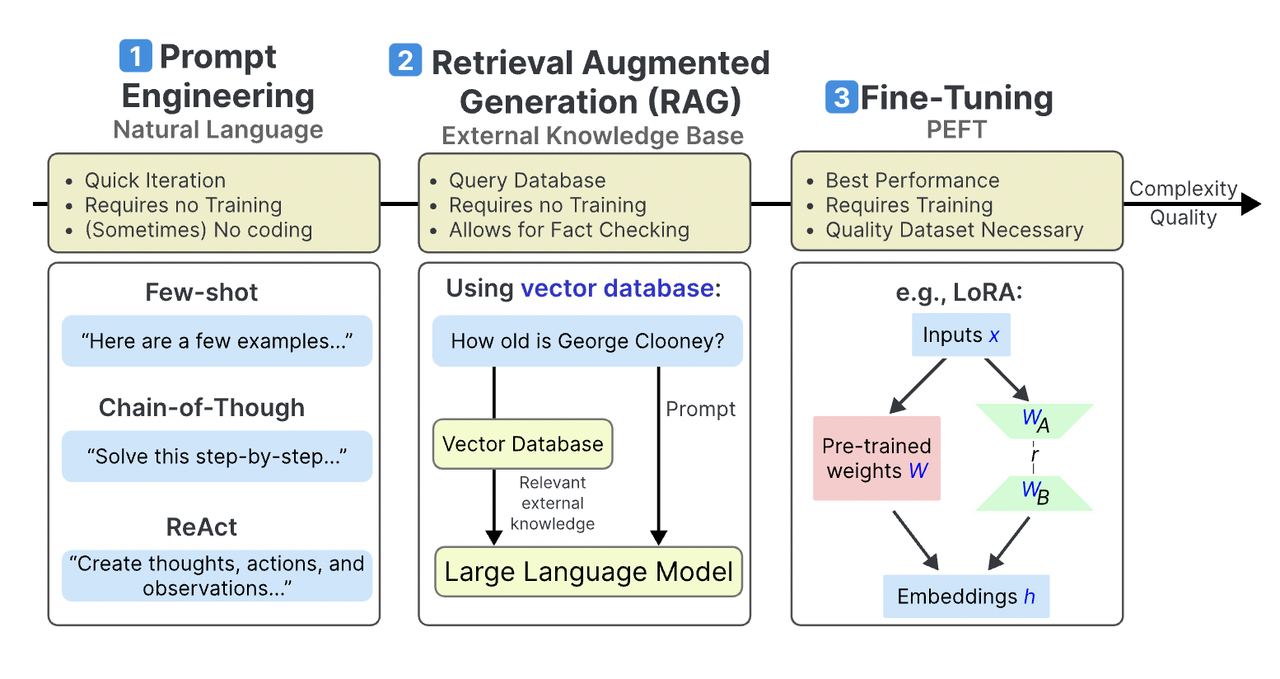
Image Source: LinkedIn - Pavan Belagatti
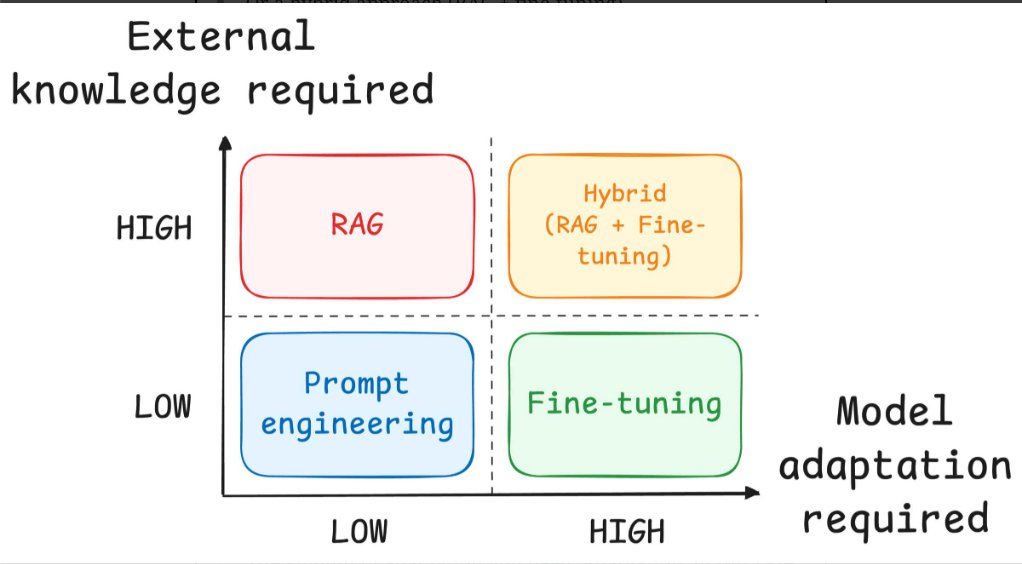
Image Source: Daily Dose of DS - Avi Chawla
How Enterprises Should Architect AI Around Unstructured Content
Enterprises dealing with documents, policies, tickets, emails, contracts, knowledge articles, chat logs and meeting notes should avoid sending everything directly into a model without control. Architect AI around content classification, retrieval controls, data minimisation, access-aware indexing, and clear rules for which sources are authoritative.
Secure enterprise AI for unstructured content should include:
- Content inventory and classification before ingestion
- Role-based access to knowledge sources
- Retrieval filtering based on user entitlements
- Sensitive document exclusion or masking rules
- Approval gates for high-impact workflows
- Monitoring for unusual query patterns or bulk extraction behaviour
The Practical Limits of Enterprise AI Security
In an ideal world, all stakeholders would be engaged before code is produced. In practice, teams build MVPs quickly; the architecture-first approach aims to make early deployments safer by baking trust boundaries and governance into straightforward patterns that scale.
Practical Steps: How to Fortify AI Implementations
- Define the AI use-case and expected user base.
- Create an inventory of data sources and classify sensitivity.
- Define trust boundaries and retrieval rules for RAG systems.
- Apply least-privilege access for models and downstream actions.
- Log model inputs/outputs where privacy and policy permit.
- Deploy monitoring and alerting for unusual query or extraction patterns.
- Establish governance: owner reviews, retention, and incident playbooks.
Common AI Failure Points
| Decision Integrity Risk | Enterprise Compromise Risk |
|---|---|
| Prompt injection and unsafe model behaviour. | Sensitive data leakage and overexposed context. |
| Retrieval poisoning or knowledge base abuse. | Excessive agent privileges across business systems. |
| Model supply chain risk. | Insecure output handling and unsafe automation. |
| Monitoring and governance failure. | Insider misuse or policy bypass. |
Why Secure AI System Architecture Must Start with Design
The risk potential for AI systems is high, so architectural design choices must be made deliberately. Embedding security from the design phase enables trust boundary mapping, authentication checkpoints, data flow visibility, and identification of crown jewels. This makes secure AI architecture and engineering far more effective than retrofitting controls later.
What Successful AI Adoption Requires
Invest in AI skills
Organisations should include AI skills development as part of professional development and operational readiness, especially where teams will use AI in security-sensitive workflows.
Adapt workflows to include AI
The successful implementation of AI hinges on complete integration within existing workflows rather than standalone deployments.
| Standalone AI | Integrated AI |
|---|---|
| Uses generic context | Uses ticket, asset, user, and SLA context |
| No built-in approval logic | Works within routing and approval rules |
| Hard to audit | Logged in the workflow |
| Optional and inconsistent | Standardised and repeatable |
| Limited measurable value | Easier to tie to workflow KPIs |
FAQ
What does "secure enterprise AI" mean in practice?
It means designing model access, data retrieval, user permissions and output handling so the AI operates within defined trust boundaries, with monitoring and governance to detect and respond to misuse or leakage.
Should we store model inputs and outputs?
Store the minimum necessary evidence for audit and improvement. Retention must balance privacy, policy and investigatory needs — secure storage and access controls are required.
Where should an organisation start?
Start with an inventory of use-cases and data sources, classify sensitive data, map trust boundaries, and pilot a small retrieval-controlled RAG deployment with monitoring and governance in place.